


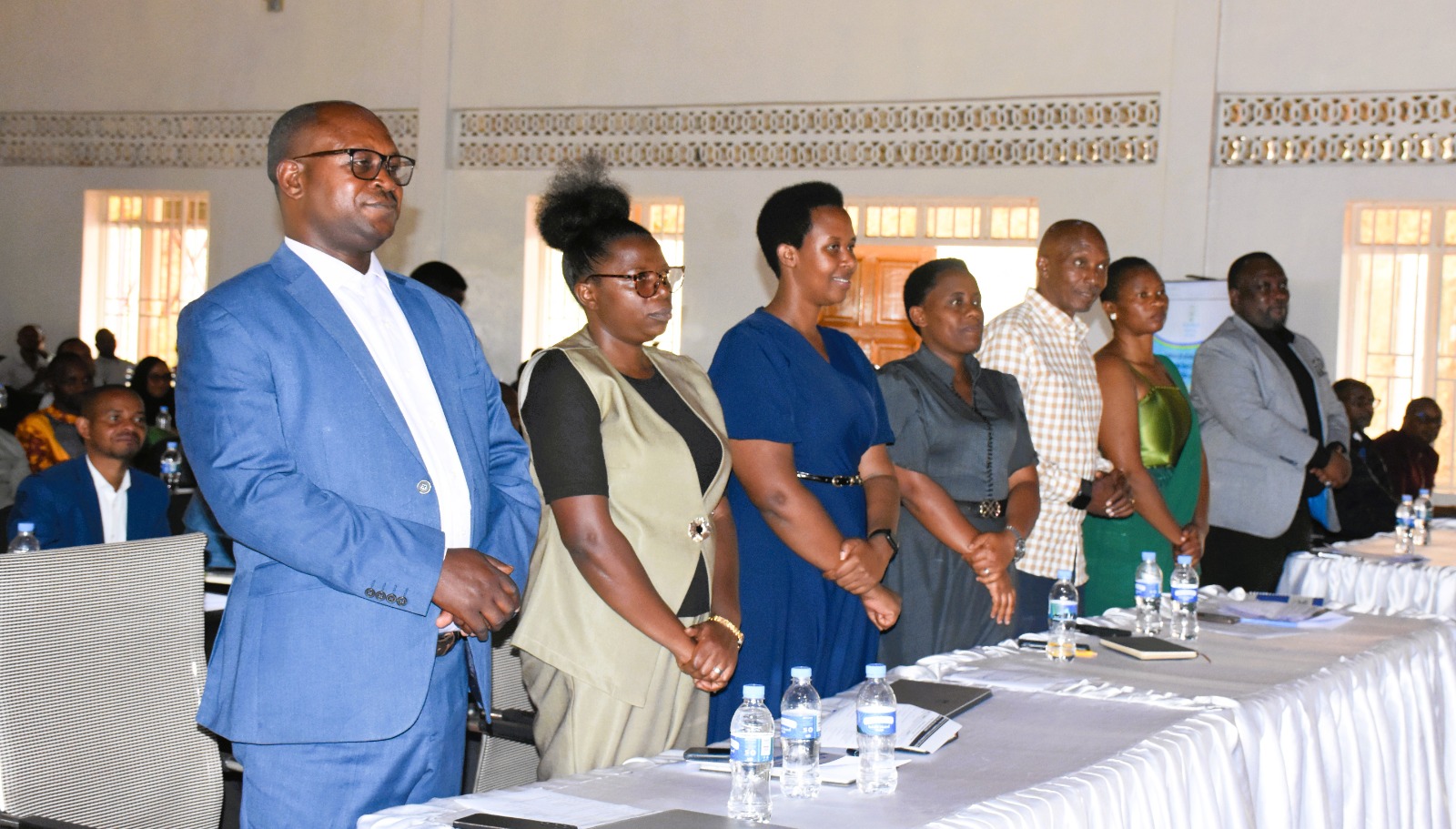
Karongi District on 11 September 2026 held an event to showcase the achievements of the District Council during its five-year term from 2021 to 2026, highlighting progress made in improving citizens’ social and economic well-being and promoting sustainable development across the District.
The event brought together members of the District Council, District leadership, representatives of central and local government institutions, security organs, partners and other stakeholders. It provided an opportunity to reflect on the Council’s contribution to the development of Karongi and to account for the decisions and initiatives undertaken during the five-year term.
Speaking at the event, Karongi District Mayor Muzungu Gerald highlighted that the District Council’s work was centred on putting citizens’ interests first, making decisions responsive to their needs and ensuring that resolutions adopted by the Council were effectively implemented. He noted that the achievements recorded during the five-year period were made possible through collaboration between the District, citizens and development partners.
The President of Karongi District Council, Vedaste Ngarambe, commended fellow Councillors for their dedication and selfless service throughout the five-year term. He said their commitment had contributed significantly to improving the social welfare and economic conditions of citizens across the District.
Ruterana Boniface, Director General in charge of Governance Programmes and Citizen-Centred Decentralization at the Ministry of Local Government (MINALOC), commended the Councillors for their commitment to serving citizens while carrying out their other professional and community responsibilities. He encouraged them to maintain the spirit of service and continue contributing to the development of their communities.
The Governor of the Western Province, Hon. Jean Bosco Ntibitura, said that development is a continuous process in which each generation builds on the achievements of those who came before it. He noted that the current District Council had built on the foundation laid by previous Councils, and encouraged future leaders to build on the achievements registered during the 2021–2026 term. He also reminded citizens that contributing ideas and providing advice for community development is a responsibility that goes beyond membership of a District Council.
Strong progress in agriculture and cash crops
Agriculture was among the sectors that recorded significant progress during the five-year period. The District placed particular emphasis on strengthening the production of cash crops, notably coffee and tea, while also promoting food crops and modern agricultural practices.
Between 2021 and 2026, 2,022.18 hectares of new tea plantations and 596.8 hectares of new coffee plantations were established. As a result, the area under coffee cultivation increased by 32.2%, reaching 1,852 hectares in 2026.
Tea production also expanded considerably. By 2026, Karongi District had 4,383 hectares under tea cultivation, representing an increase of 46.13%. During the five-year period, total coffee production reached 3,135.75 tonnes, while tea production amounted to 19,834.05 tonnes.
Tea production alone increased from 3,346.98 tonnes to 4,554 tonnes, representing a 26.5% increase. The expansion of coffee plantations and the rejuvenation of existing plantations are expected to contribute further to increased production in the coming years.
The District also strengthened efforts to reduce post-harvest losses through the Sustainable Agricultural Intensification and Productivity (SAIP) project, implemented since 2023. These interventions have contributed to improved agricultural practices, including increased production of vegetables and fruits in irrigated areas such as Nyarugenge and other locations.
The promotion of food crops was another important component of the District’s agricultural transformation. Farmers were encouraged to expand potato production beyond its traditional production areas of Rwankuba and Twumba, leading to increased adoption of potato farming in other sectors.
Girinka strengthens livelihoods and livestock production
Livestock development also remained an important pillar of the District’s efforts to improve household livelihoods. During the five-year period, 2,812 households received cows under the Girinka Munyarwanda programme, initiated by His Excellency President Paul Kagame.
The programme contributed to increased milk production, improved household nutrition, increased income from milk sales, improved soil fertility through the use of manure and enhanced agricultural productivity.
Overall, the livestock population increased significantly during the period. Cattle numbers rose from 48,390 in 2021 to 55,683 in 2026, an increase of 7,293 cattle, equivalent to 15%.
The number of sheep increased from 7,660 to 9,766, representing a 27.4% increase, while pigs increased from 30,125 to 38,650, an increase of 8,525 pigs or 28.2%.
Goat numbers rose from 46,636 to 50,230, representing a 7.7% increase, while poultry increased from 40,707 to 55,790, equivalent to a 37% increase.
Beekeeping also expanded, with the number of beekeepers increasing from 60 to 86, representing a 43.3% increase.
Major expansion of modern fish farming
Karongi’s fish farming sector recorded particularly strong growth during the five-year period. Modern fish farming expanded from 80 fish cages to 107, representing an increase of 37.75%.
This expansion was accompanied by a substantial increase in fish production, which rose from 57 tonnes to 315 tonnes, representing a remarkable 452.6% increase.
The growth of fish farming is contributing to increased food availability, income generation and livelihood diversification for communities engaged in fisheries and aquaculture.
Land conservation and climate resilience
The District also invested significantly in soil and land conservation as part of efforts to protect agricultural land, increase productivity and strengthen resilience to climate change.
More than 3,400 hectares were protected against soil erosion through the construction of erosion-control measures, including radical and progressive terraces, across different sectors of the District. A total of 3,072.78 hectares were covered by radical terraces, while more than 417.21 hectares were treated with progressive terraces.
These interventions have helped protect fertile soils from erosion and create better conditions for farmers to sustainably increase agricultural production.
In addition, agroforestry and fruit tree seedlings were distributed to cover more than 2,947.78 hectares. The initiative aimed not only to address the effects of climate change but also to improve soil conservation, increase tree cover and contribute to better household nutrition.
Citizens employed in the land conservation activities were paid for their work, enabling them to invest in their livelihoods, while farmers whose land was treated with terraces continued to benefit from improved soil management and increased agricultural productivity.
Improved connectivity through foot bridges
Infrastructure development was another area in which Karongi District registered notable progress. At the beginning of the five-year period, the District had seven foot bridges. During the 2021–2026 term, 31 additional aerial bridges were constructed, bringing the total number to 38.
The expansion of aerial bridges has improved connectivity for communities, particularly those living in areas where terrain and rivers can make movement difficult, thereby facilitating access to markets, schools, health services and other essential facilities.
The achievements presented during the event demonstrate the contribution of the Karongi District Council to local development over the 2021–2026 term. Through citizen-centred decision-making, collaboration with the District administration, communities and partners, the Council contributed to progress in agriculture, livestock, fisheries, environmental protection and infrastructure.
As the five-year term comes to an end, the achievements provide a foundation on which future District Councils can build, with the continued participation of citizens and partners to further advance the social and economic development of Karongi District.