


In the quiet hills of Karongi District, where agriculture has long been the backbone of rural livelihoods, hundreds of families are rewriting their stories. What was once a daily struggle against poverty is steadily becoming a journey of hope, resilience, and economic independence, thanks to the Tubeho Neza Aheza project implemented by Caritas Nyundo–Kibuye.
Supported by the Government of Slovenia through its Ministry of Foreign and European Affairs, in partnership with Caritas Slovenia, the initiative is proving that lasting development begins when communities are equipped with the knowledge, tools, and confidence to shape their own future.
Operating in the sectors of Rugabano, Rwakuba, Murundi, and Gashali, the project has reached 1,595 beneficiaries organized into 58 community groups, bringing together both youth and adults to learn, save, invest, and grow together.
According to Kwizera Jean Damascene, a Project Officer at Caritas Nyundo–Kibuye, the project was designed to strengthen household resilience through sustainable agriculture, livestock rearing, environmental protection, and financial inclusion.
“We wanted to help families build sustainable livelihoods instead of depending on short-term assistance,” he explained. “Our role has been to provide the resources, skills, and opportunities that enable people to lift themselves out of poverty.”
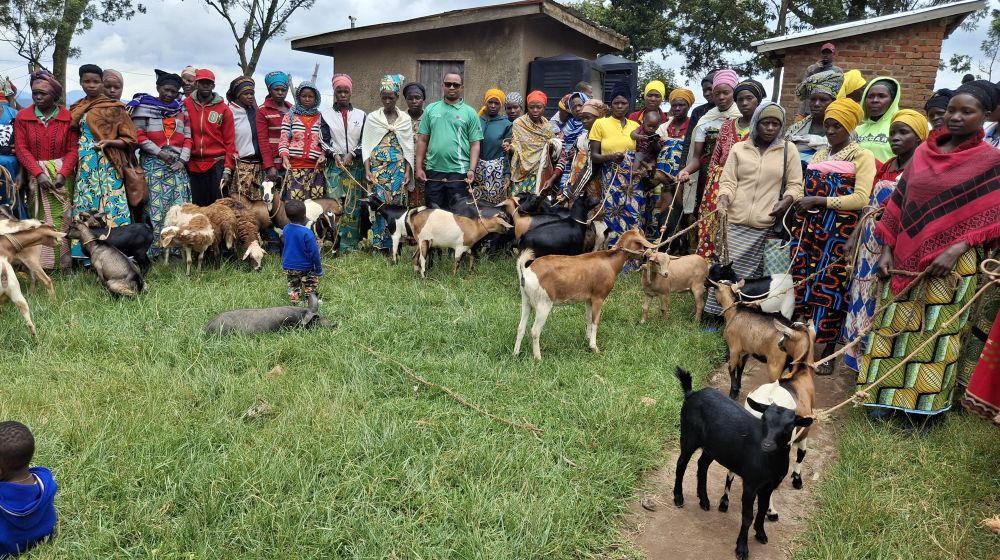
To achieve this, the project has distributed 1,595 small livestock, including pigs, goats, and sheep, enabling households to improve nutrition, generate income, and access organic manure to increase agricultural productivity.
Farmers have also received fruit tree seedlings, improved planting materials, irrigation pumps for dry seasons, and practical training in modern farming techniques. Beyond agriculture, the project has introduced a comprehensive package of interventions designed to improve every aspect of rural life, from household welfare to entrepreneurship and environmental sustainability.
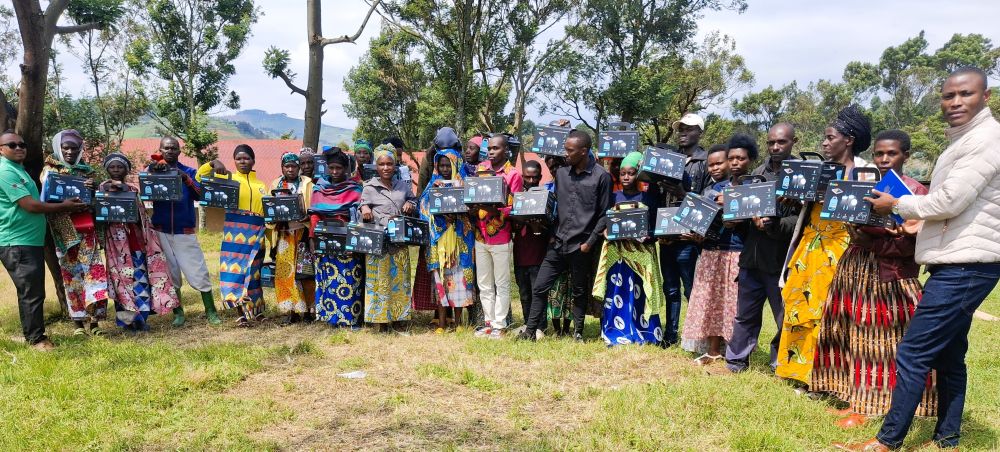
One of its most significant achievements has been expanding access to clean and renewable energy. A total of 725 households have received solar lighting systems, allowing families to extend productive hours after sunset, children to study in safer conditions, and households to reduce dependence on costly and unreliable lighting sources.
The project has also distributed 319 fuel-efficient cookstoves, helping families reduce firewood consumption, lower cooking costs, and minimize pressure on the environment. For many women, the improved stoves have reduced the time spent collecting firewood, giving them more opportunities to engage in income-generating activities and care for their families.
Beyond providing physical assets, the project has invested heavily in developing people’s skills and confidence. Beneficiaries regularly participate in training sessions covering modern agriculture, livestock management, entrepreneurship, financial literacy, savings culture, climate-smart farming, and business development. These practical skills have empowered participants to make informed financial decisions and establish sustainable sources of income.
An equally transformative component of the initiative has been the establishment of community savings and lending groups. Organized into 58 groups, beneficiaries save regularly, access affordable loans, and invest collectively in businesses and productive activities. According to Kwizera, these groups have become engines of local economic growth, enabling members to support one another while building financial resilience.
“Some beneficiaries started with only RWF 100,000 in business capital,” he noted. “Today, several of them own businesses worth more than RWF 1 million. That is the power of combining determination with opportunity.”
Among those whose lives have been transformed is Uwiringiyimana Concensa, a young woman from Rugabano Sector. Before joining the project, she says many young people viewed agriculture as an unattractive occupation with little potential to improve their lives.
“The Tubeho Neza Aheza project completely changed our mindset,” she recalled. “It taught us that farming is not a sign of poverty but an opportunity for prosperity.”
Through the project, she joined a savings group, received entrepreneurship training, and gained the confidence to invest in vegetable farming. She cultivated carrots, cabbages, and amaranth, earning RWF 150,000 from her first carrot harvest alone.
At the same time, she operated a small Mobile Money business with less than RWF 50,000 in capital. After receiving livestock through the project, she successfully raised and sold the animal, using the proceeds to expand her business.
Today, she owns a boutique valued at more than RWF 1.5 million and is financing her university education with the income generated from her business.
“I never imagined I could reach this level,” she said with pride. “Today I pay my own tuition fees, support myself, and plan for a brighter future.”
Another inspiring testimony comes from Kwihangana Jean Baptiste, who joined the project shortly after getting married.
“When I started my family, I had very little,” he said. “Our savings group welcomed me, and Caritas gave me a pig to rear.”
After successfully raising the pig, he sold it for RWF 230,000. He then combined those earnings with loans from his savings group to establish a retail shop.
Today, his boutique is valued at between RWF 3 million and RWF 4 million, providing a stable income that supports his household.
“The support gave me a starting point, but success came from working hard and making good use of every opportunity,” he explained. “My advice to others is simple: don’t keep your hands in your pockets. Work hard because no one can develop your life better than you can.”
Stories like these are becoming increasingly common across the four sectors where the project operates. Families that once depended solely on subsistence farming are now diversifying their incomes, investing in businesses, improving their homes, educating their children, and planning confidently for the future.
More importantly, the project has strengthened social cohesion by encouraging beneficiaries to work together, share experiences, and support one another through community groups. These networks have become platforms for innovation, learning, and mutual accountability, ensuring that development extends beyond individual households to benefit entire communities.
With a total investment of RWF 780 million, the Tubeho Neza Aheza project began in April 2024 and will continue until October 2027. While the project still has time to run, its impact is already evident in the transformed lives of hundreds of families across Karongi District.
For Caritas Nyundo–Kibuye and its partners, success is measured not only by the number of livestock distributed or the value of investments made, but by the confidence restored to people who once believed poverty defined their future.
Across the green hills of Karongi, that future is being rewritten—one family, one business, and one success story at a time.
Gashonga Jean Claude