

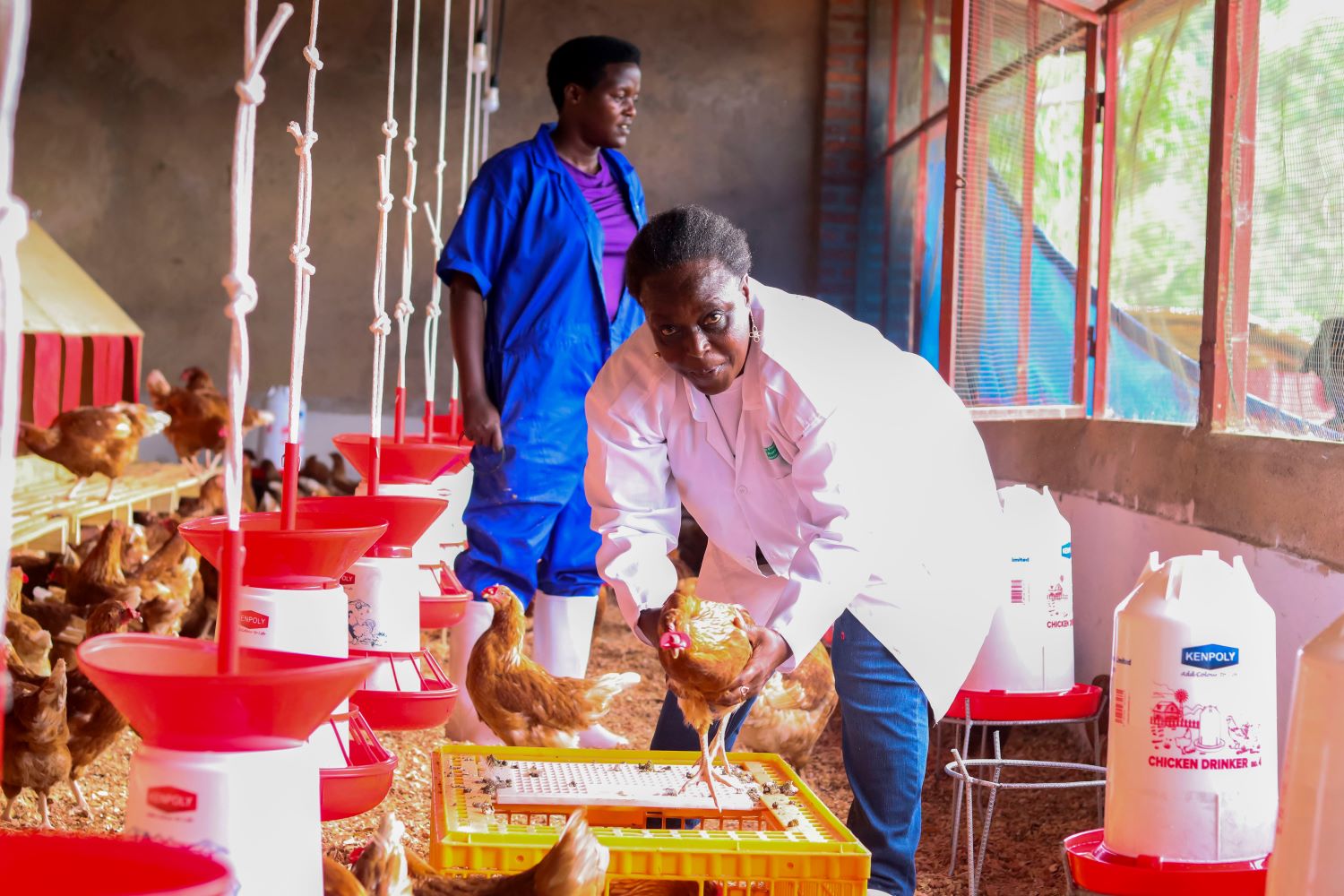
The Food and Agriculture Organization of the United Nations (FAO), through the JPRWEE project implemented by INADES Foundation, has provided 2,000 chickens to two cooperatives—one in Kilimbi Sector and another in Gihombo Sector, both located in Nyamasheke District. The initiative aims to help residents improve their well-being by combating malnutrition.
Yankurije Wnos, a father of three, said that in Gihombo, very few households have access to animal-based foods.
She said, “People eat meat only on New Year’s Day, and then start planning to eat it again the next New Year, thinking that eating meat on other days isn’t necessary.”
Uwiringiyimana Jeanne from Gihombo Sector said that they usually eat eggs only three times a month.
She said, “Now that we’ve received laying hens, the number of eggs will increase. I think 10 eggs per month will be enough.”
According to Josepha Mukamana, Rural Development Expert in FAO in Charge of JPRWEE, the organization decided to give chickens to residents to help them achieve food security and fight malnutrition.
She said, “When it comes to egg consumption, Rwandans are still far below the international average. That’s why we launched this initiative—to increase egg production in rural areas.”

Hitimana Celestin, the Program Director at INADES Formation Rwanda, which implements the project, urged the beneficiaries to take good care of the chickens so that the profits from them will help them meet their household nutrition needs.
The Vice Mayor of Nyamasheke District in charge of Social Affairs, Mukankusi Athanasie, appreciated the partners, saying that the project is expected to help reduce stunting.
She said, “One of the causes of malnutrition and stunting is the lack of access to animal-based foods, especially eggs. Research shows that feeding a child one egg per day can prevent malnutrition.”

The 2,000 chickens provided to Nyamasheke residents are capable of producing about 1,800 eggs per day. It is planned that 10% of these eggs—approximately 180 per day—will be distributed free of charge to Early Childhood Development (ECD) centers.
GC