

Despite Rwanda’s Progress in Medical Advancements, Especially in Surgery, Challenges Remain
Although Rwanda has made significant strides in advancing healthcare, particularly in surgical care, the country still has a long way to go to meet optimal standards.
Currently, Rwanda performs 1,788 surgeries per 100,000 people. According to the World Health Organization (WHO), optimal surgical care requires 5,000 surgeries per 100,000 people.
This shortfall is largely due to the scarcity of specialized surgical professionals, with Rwanda currently having only 162 surgeons. Based on WHO guidelines recommending 10 surgeons per 100,000 people, Rwanda, with a population of approximately 14 million, needs around 1,400 surgeons.
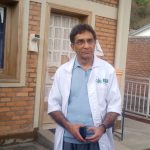
Interview with Prof. Faustin Ntirenganya
President of the Rwanda Society of Surgeons, Head of Plastic and Reconstructive Surgery at the University Teaching Hospital of Kigali (CHUK), and Director of the Surgical Department at the University of Rwanda.
The source of the story, IGIHE asked him how many surgeries are performed annually in Rwanda?
Prof. Ntirenganya: Based on the latest five-year report, approximately 242,000 surgeries are conducted each year in Rwanda. That equates to 1,788 per 100,000 people — far below the ideal of 5,000. This indicates that less than half the number of people who should be getting surgery actually do. Many patients are on waiting lists, and surgical services remain limited. One key issue is the low number of available surgeons.
Currently, we have 162 surgeons. But as mentioned, with a population of 14 million, we should have at least 1,400.
What are the most common conditions requiring surgery?
It’s difficult to pinpoint a single type of condition or region because demand is high across the board. However, most surgeries in Rwanda are for non-communicable diseases. These include trauma-related injuries, cancer, congenital defects, and orthopedic issues. Pediatric surgeries are also common due to congenital issues like malformed intestines or limbs — accounting for roughly a third of the caseload.
We heard that CHUK alone has over 600 patients waiting for brain surgery. Which specialties have the highest demand?
Neurosurgery (brain and head surgeries) indeed has one of the longest waiting lists. At CHUK, we have about 600 patients waiting for brain surgery. But that doesn’t mean it’s the only overwhelmed specialty.
If you look at the numbers, orthopedic patients are more numerous. So are patients needing abdominal or gastrointestinal surgeries.
Today, there’s no single specialty in Rwanda where surgical care is entirely adequate. All areas are overwhelmed. For example, in CHUK’s plastic surgery department, there are over 300 patients waiting.
The full waiting list at CHUK has more than 3,000 patients, spread across various specialties.
What is being done to reduce the waiting lists?
There are short- and long-term strategies. Immediately, we must prioritize urgent cases. Patients should not wait in line indiscriminately — someone needing emergency brain surgery shouldn’t wait behind someone with a broken arm.
We must also maximize our existing resources. Even with few surgeons, we can optimize their schedules, such as working weekends or offsite. Training more surgeons is also vital, given the growing demand.
As an expert in plastic surgery, how is this specialty evolving in Rwanda?
Plastic surgery encompasses three major branches:
- Plastic Surgery – Correcting congenital deformities
- Reconstructive Surgery – Restoring form after injury or disease (like cancer or trauma)
- Cosmetic Surgery – Enhancing appearance without medical necessity
In Rwanda, 90% of what we do falls under the first two categories. Cosmetic surgery — such as breast augmentation/reduction, facial corrections, or liposuction — makes up a smaller fraction.
Last year at CHUK alone, we operated on 496 patients. That’s about 10 patients per week. Including other hospitals, the number is slightly higher. As for cosmetic cases, I perform about one per week in private facilities — around 50 per year.
Who typically seeks cosmetic surgery – men or women?
Mostly women. They often seek post-pregnancy abdominal surgery, breast augmentation or reduction, and buttock enhancements. Men also undergo cosmetic procedures, though less frequently — primarily fat removal, chest correction, and facial rejuvenation.
We are also planning to introduce hair transplant services soon, as many men seek to address baldness.
Are there any health risks involved in cosmetic surgery?
There are no specific risks exclusive to cosmetic procedures. The general risks of any surgery apply — bleeding, infection, scarring. Each specific procedure has its own risks, which are thoroughly discussed with patients beforehand.
What matters is informed consent and proper understanding. Cosmetic surgery should never be taken lightly or treated like a TV makeover show. Once done, many procedures can’t be undone.
Also, a nose or breast from one person doesn’t necessarily fit someone else’s body — harmony matters. People must understand that beauty is subjective and culturally influenced. Africans might want to enhance features that Westerners might want to minimize — it’s cultural.
How do you evaluate Rwanda’s progress in surgery over the past 31 years?
We’ve made great progress. There’s now a strong focus on expanding surgical training and leveraging modern technology.
Technological innovations — like minimally invasive surgery — are now common in Rwanda. We have robotic surgery equipment used for training, and in the next two to three years, we plan to use them on actual patients.
The main limitation is the low number of trained professionals and the high patient demand. We’re pushing to train more surgeons and specialists. For instance, in plastic surgery, we used to be only two, now we are five, and 17 more are in training. In five years, we’ll have even more.
What about equipment and infrastructure?
To provide proper surgical care, we must first diagnose accurately using imaging and laboratory tools. We have made strides in diagnostics, especially with technologies introduced during the COVID-19 era.
CT scans are available, though not yet widespread. Ideally, each district hospital should have one. MRI machines are available in some hospitals (e.g., King Faisal), but not at CHUK yet. PET scans, crucial for cancer diagnosis and monitoring, are not yet available but are being considered.
We also need to maintain our existing equipment. High-tech machines shouldn’t break down due to poor maintenance.
What are the main challenges facing surgical care in Rwanda?
There are three primary challenges:
- Human Resources: It takes years to train surgeons, anesthetists, and support staff. Each surgical procedure requires a team of 6–20 professionals. Retaining skilled workers is vital. When we lose a trained surgeon, it’s a major setback.
- Distribution: Around 70% of surgeons are based in Kigali, while 90% of the population lives outside the capital. This imbalance must be addressed.
- Medical Equipment and Supplies: Access to necessary surgical tools and the process of acquiring them is still inefficient. Sometimes equipment is lacking or unavailable when needed.
Additionally, digital technology should be integrated into all aspects of surgery — not just seen as an add-on. Technology is the future of surgical care.